
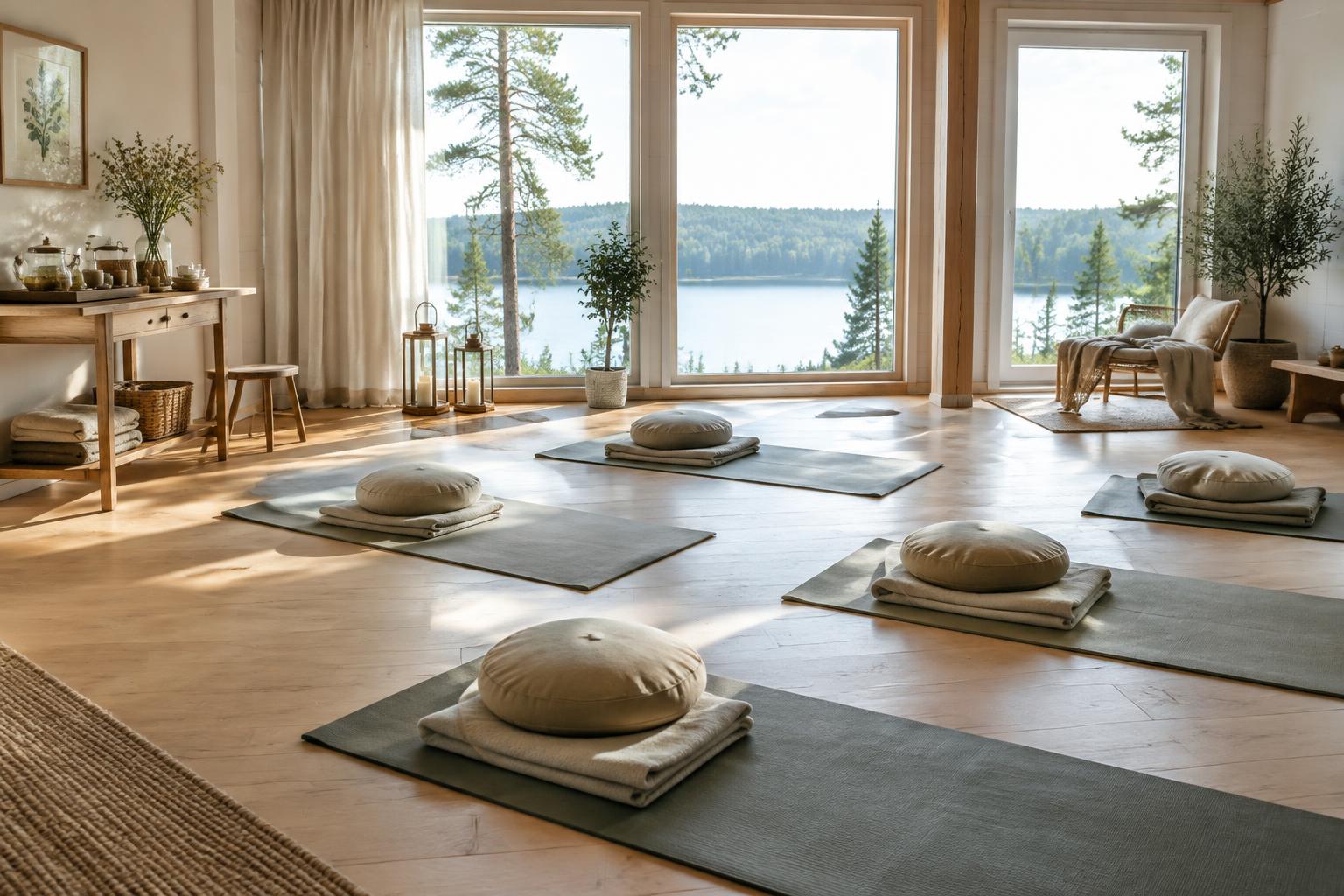
The essentials first
Plan a retreat for small groups around a clear purpose, with a few shared sessions and plenty of personal time. Schedule meals and breaks before the activities, make participation flexible, and prepare an alternative for any outdoor elements. At Görväln Naturreservat, bookings are only made in conjunction with an actual event held at the venue. Overnight accommodation can only be an add-on for the event's participants and can never be booked separately.
Start with what the group needs – not an activity list
A retreat doesn't need to pack in as much as possible. The difference compared to an activity day often lies in the rhythm: participants get time to settle in, follow a common thread, and have time to themselves without feeling they are missing out on something. For a smaller group, it becomes particularly important to balance closeness with personal freedom.
Therefore, formulate a main purpose before you choose the content. This could be to create space for stillness, gather an association for reflection, or allow a work group to pause without the usual performance demands. A retreat should not promise medical effects or treat participants' personal problems.
Görväln Naturreservat is a flexible venue for private and corporate events, meetings, activities, and group occasions. Approach your retreat as a specific event and coordinate which arrangements best suit your programme.
- Write the purpose in a single sentence for participants to read before they register.
- Choose a unifying theme, for example, presence, reflection, or calm community.
- Decide which parts are shared and which are optional.
- Appoint a responsible person to keep to the schedule and handle practical questions.
Build the programme around breaks and meals
First, schedule arrival, meals, personal time, and departure. Then, place the guided sessions in the gaps. This prevents a common planning mistake: recovery becoming whatever time happens to be left over once the activities are fully booked.
Let a session involving discussion or concentration be followed by a calmer period. Avoid using every break for instructions, group evaluation, or the next task. Personal time needs to be just that – personal time, without the pressure of a specific experience.
In a small group, it's very noticeable when someone opts out. Therefore, state right from the introduction that it's permissible to listen without speaking, skip an optional activity, or simply rest. If the retreat is organised by an employer, expectations regarding attendance and personal sharing need to be particularly clear.
Sample schedule: a lunch-to-lunch retreat
The following schedule is a planning example, not a ready-made package or a promise of available services. The format assumes that the event's schedule, meals, spaces, and any overnight accommodation have been coordinated in advance.
The first day is about leaving the pace of everyday life behind. The second provides space to gather one's thoughts before the group departs. Keep the evening's content light so that participants don't have to choose between rest and an important group activity.
- Day 1, 12:00: Arrival and lunch with plenty of time to settle in.
- 13:00: Brief introduction covering the purpose, practical framework, and the optional nature of some activities.
- 13:30: Individual reflection on the theme, followed by an optional conversation in pairs.
- 14:30: Break and personal time with no group task.
- 15:30: Optional gentle walk, if weather, accessibility, and local regulations permit; also plan a quiet alternative.
- 16:30: Free time until dinner.
- 18:00: Dinner with no work agenda or mandatory conversation exercise.
- 19:30: Short, optional evening gathering, followed by undisturbed personal time.
- Day 2, 08:00: Breakfast.
- 09:00: A quiet individual start, for example, writing or stillness.
- 10:00: Group reflection on what participants want to take away with them.
- 11:00: Break and time for practical preparations before departure.
- 12:00: Lunch and a clear conclusion.
Plan the food as part of the rhythm
Meals provide anchor points for the retreat and need to be given enough time. Don't schedule a demanding session immediately after lunch, and avoid letting a long afternoon session push dinner back. Inform participants in advance about when food will be served and what they need to arrange or bring themselves, according to your agreement.
Collect information on allergies and other dietary needs early on. Confirm with the person responsible for the food what can be accommodated and how allergies are handled; do not promise allergen-safe food before this has been clarified. Describe the food factually instead of making promises about cleansing or health effects.
Private chef and catering are optional add-on services that are quoted for separately and offered subject to availability. Regardless of the chosen solution, you need to decide who is responsible for serving, clearing away, and communication regarding dietary needs. Read more about possible [optional add-on services](/tillaggstjanster) and coordinate what is suitable for your particular event.
- Set the meal times before booking the guided sessions.
- Set a final date for submitting dietary requirements and allergy information.
- Coordinate how drinks and any snacks will be arranged.
- Allow at least one meal to be completely free of organised conversation tasks.
Enable rest and recovery, even for those who want to keep to themselves
A small group is not automatically a quiet group. Intense conversations and constant togetherness can become draining. Therefore, create a simple agreement: no one needs to explain why they are opting out of an optional activity, and personal stories should not be shared with others without consent.
Before the event, ask about practical accessibility needs without requesting diagnoses. This could relate to mobility, the need for clear instructions, or the option to participate without physical activity. Then check what adjustments can actually be made at the venue.
If you want to have screen-free periods, present them as an agreement with room for necessary contact. And if silence is part of the programme: state when it begins, when it ends, and where participants can ask practical questions.
Link any overnight accommodation to the retreat's programme
A two-day format can provide a smoother transition between the evening's calm and the next morning's reflection. But staying overnight should not be the retreat's only component. There needs to be an actual event at the venue with a clear purpose and programme.
At Görväln Naturreservat, overnight accommodation may only be an add-on for participants of the event. It can never be booked separately. Coordinate the possibilities and practical arrangements before sending an invitation that assumes participants will be staying overnight.
Ask about times, sleeping arrangements, and what participants need to bring, without assuming that a certain standard or equipment is included. Read about [event-related overnight accommodation](/overnattning) as a basis for your planning.
Confirm the arrangements before the invitation goes out
A calm retreat requires clear behind-the-scenes planning. Appoint a contact person, delegate responsibility for the different elements, and prepare a backup plan for bad weather or changing participant needs. Check the rules for any planned outdoor activities instead of assuming that all formats are possible.
Then send a short letter to participants with the purpose, schedule, optional activities, meals, packing list, and contact details. Also state what is not included, so that no one expects treatments, equipment, or guided activities that have not been agreed upon.
Use the [practical information](/praktiskt) as a starting point and send an [enquiry to Görväln Naturreservat](/kontakt) with your desired date, estimated number of participants, and a simple draft programme. Bookings are only made in conjunction with an actual event held at the venue.
- Is the purpose clear and is the programme spacious enough?
- Have the people responsible for sessions, meals, and practical questions been appointed?
- Have the spaces, equipment, and accessibility needs been coordinated?
- Is there a feasible alternative for outdoor activities?
- Has any event-related overnight accommodation been confirmed before being communicated?
- Is it clear what is included and what participants are responsible for themselves?
Frequently asked questions
How many guided sessions should a retreat for small groups include?
As a starting point for planning, two or three guided sessions per full day can be enough. Adjust according to the length of the sessions and the group's needs. If the programme only works by shortening the breaks, it's better to remove a session.
Does a retreat need to include yoga or meditation?
No. A retreat can be built around writing, calm discussions, stillness, and personal time. Choose content that supports the group's purpose, and ensure you have appropriate leadership if you include elements that require special expertise.
How do we avoid the retreat feeling like a conference?
Limit presentations, work tasks, and demands for results. Use a simple theme, allow space for individual reflection, and let meals and breaks be free from any work agenda. At the same time, clearly describe what participants are expected to take part in.
Can participants book only overnight accommodation?
No. At Görväln Naturreservat, overnight accommodation can only be an add-on for participants of an actual event at the venue and can never be booked separately.
Tell us what you would like to create.
Describe the type of event, its purpose, dates and the arrangement you have in mind, and we can assess the different parts of the venue for your occasion.
Send an enquiry