The essentials first
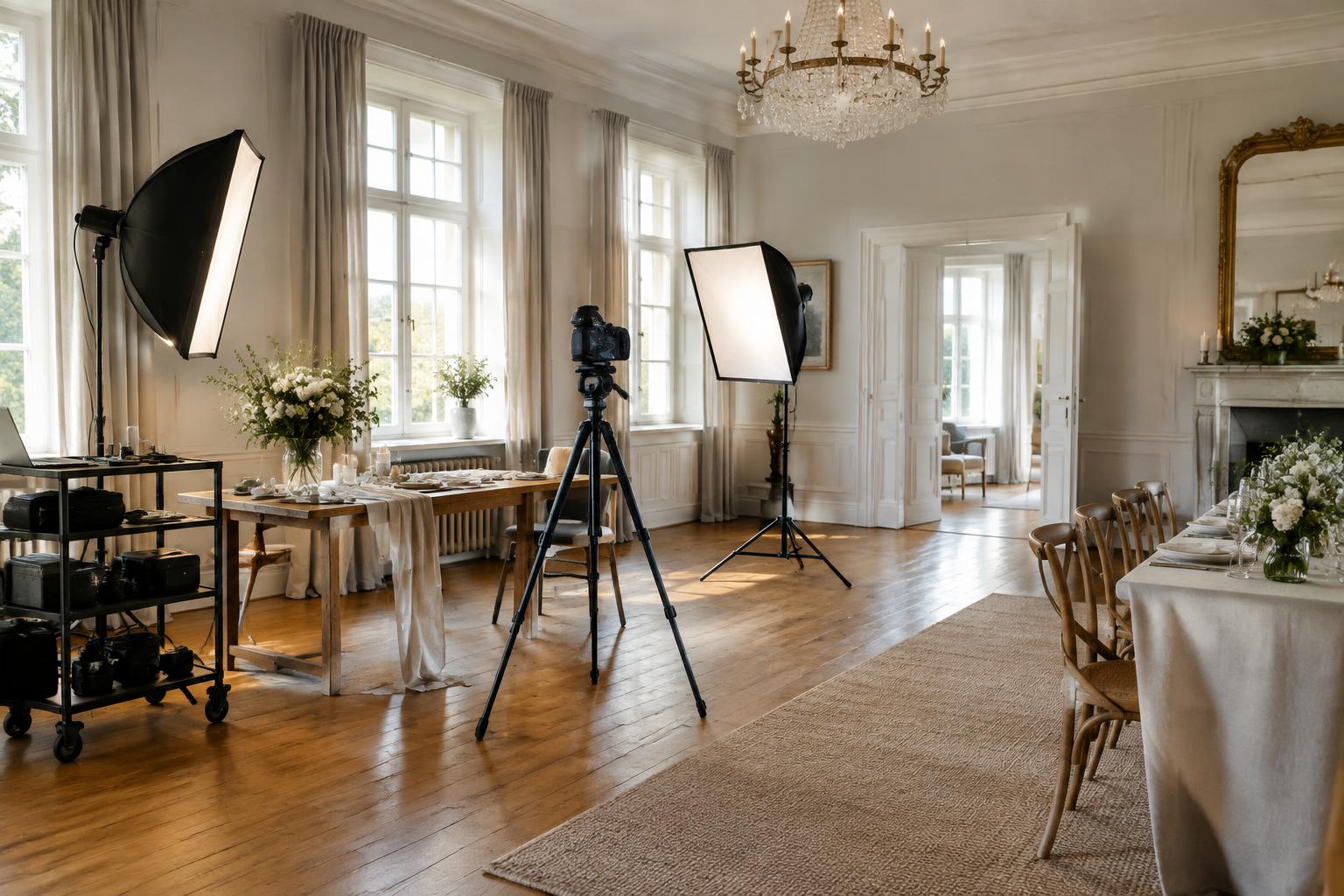
When choosing a venue for photography and production, you first need to confirm which settings can be used, how equipment can be moved, and where the team can prepare the next shot. Plan a photography zone, a preparation zone, and a logistics zone based on the agreed-upon areas. Also confirm access times, power requirements, weather contingency plans, and consideration for others before finalising the shot list and schedule.
Start with the image requirements, not a finalised booking list
A location might look right for a photoshoot but still require a different approach than the production team initially envisioned. For portraits, product shots, and video, the needs differ: background, sound, light, preparation, and the amount of equipment all affect which settings will work.
Görväln Naturreservat is a flexible venue for private and corporate events. An enquiry for photography or production must therefore describe an actual event at the venue. Bookings are only made in conjunction with such an event; which areas and working methods can be included needs to be confirmed for the specific occasion.
Start by dividing your desired shots into essential images and those you would like to add if possible. This makes it easier to assess if the venue is suitable, without the entire day depending on a specific background or a brief moment of perfect light.
- What will be produced: still images, video, or both?
- Which subjects and shots are crucial for the final delivery?
- How many people will be participating in total, including talent and the client?
- Which needs are absolute requirements, and which can be met with alternative solutions?
Assess each setting based on the actual shot
Use the [photos of the venue](/bilder) as an initial orientation guide, not as a guarantee of access, furnishings, or lighting conditions. Ask which settings might be available for your date and if a reconnaissance visit can be arranged before making a decision.
During a reconnaissance visit, you should assess more than just the background. Check where the camera needs to be positioned, how much space the lighting setup requires, and whether the team can work without blocking any pathways. A setting that works for a tight portrait might not work for a wide group shot.
For video production, the soundscape is an additional factor. Specify whether you need to record dialogue on site or if the audio can be handled separately. Do not assume that a natural setting is quiet or that an area can be used without interruption.
- Background: what will actually be in the shot?
- Camera position: is there an agreed space for the desired framing?
- Light: how sensitive is the image to weather and time of day?
- Workspace: where do tripods, talent, and assistants need to stand?
- Surroundings: what movements or sounds do you need to be able to manage?
Plan three functional zones
Zones are a way to organise the work, not a promise of separate rooms or reserved areas. Work with the spaces that are explicitly included and decide how they will be used during different parts of the day. If space is limited, the same area can serve different functions at different times.
The photography zone is the active workspace around the subject and camera. Only the equipment and people needed for the current take should be in this area. The preparation zone is used for the next talent, wardrobe, or props. The logistics zone is for bags, packaging, and equipment not in use.
If changing, make-up, or sensitive materials require privacy, this must be stated as a specific need in your enquiry. Do not assume that a dedicated space for this is available.
- Photography zone: define the work boundary and keep pathways clear.
- Preparation zone: gather props for the next shot and give clear instructions to the talent.
- Logistics zone: label bags and separate used equipment from items ready to be packed.
- Responsibility: designate someone to ensure the zones remain functional even when the pace picks up.
Let the shot order reduce moves and waiting time
The most efficient schedule rarely follows the page order of the shot list. Instead, group shots by setting, lighting, and the people involved. Every change of setting involves not just moving, but also checking equipment, props, background, and continuity.
Mark which shots are time-sensitive and which can be moved. Do not leave all the mandatory shots until the end. If time becomes short, the team must be able to cut supplementary shots without losing the production's most important deliverables.
Give each block of shots a clear endpoint: who decides that there is enough footage, and who gives the go-ahead to change the setup? This reduces the risk of the team dismantling a setup before the client has had time to approve the result.
- Check-in and review of the agreed-upon areas.
- Load-in, setup, and check of the first shot.
- Shot blocks arranged by setting and shared preparations.
- Break and review of remaining priorities.
- Pick-up shots, packing, and restoring the area within the agreed time.
Confirm the technical details and access before the production day
Describe the equipment in enough detail for your needs to be assessed. Writing 'a small photoshoot' doesn't clarify whether you are bringing one camera or several light stands, a background system, and large transport cases. Mention any heavy, bulky, or particularly sensitive items in your initial contact.
Use the [practical information](/praktiskt) as a starting point and ask for clarification where the information is insufficient. Access to electricity, an internet connection, loading areas, parking, or storage cannot be assumed. If the production depends on a specific technical requirement, it should be confirmed before the plan is finalised.
- Specify the power requirements for the equipment that will be used simultaneously.
- Ask how load-in and load-out can be carried out and during what times.
- Confirm the placement of tripods, cables, protective covers, and any rigging.
- Describe if an internet connection is needed for review, transfer, or live streaming.
- Plan who will be responsible for data backup and keeping an eye on the equipment.
Incorporate consideration for nature, visitors, and other activities
A booking should not be interpreted as the surroundings being closed off or the production having exclusive rights to all settings. Ask for clarity on what you can actually use and how you should act if other people move close to your work area.
Plan in a way that allows takes to be paused and equipment to be kept clear of pathways. Do not move natural materials, make any alterations to vegetation, or attach equipment to trees or other surfaces without first checking what is permitted. Props, tape, and packaging must be included in the clean-up and restoration process.
Drones, smoke, open flames, amplified sound, and other special elements need to be raised separately. Which rules or permits may apply depends on the execution. A booking confirmation does not replace necessary checks with the relevant authorities or responsible parties.
Create a contingency plan that still yields usable images
A weather plan needs to describe what you will produce if the conditions change, not just say 'we'll sort it out on the day'. Identify which subjects can be simplified, which framings work with a different background, and the latest point at which a decision to change the plan must be made.
Do not assume there is an indoor setting to move to. If a covered alternative is crucial, both its availability and use must be confirmed. The same applies to the possibility of changing the date or extending the working hours.
Also distinguish between usable weather and safe working conditions. Designate someone in the production team to stop an activity if, for example, wind or rain makes handling the equipment unsafe.
Send an enquiry that can be evaluated
A brief production summary is more useful than a long collection of inspiration without practical details. Feel free to attach a few reference images, but explain what you want to achieve from them: the colour palette, framing, mood of the light, or the relationship between the person and the environment.
Send the summary via the [contact page](/kontakt) and ask for the scope to be clarified before booking. The goal is to have a shared understanding of which areas, times, and work activities are included, what questions remain, and who is responsible for them.
- Desired date and any alternative dates.
- The purpose of the production and requirements for stills, video, and audio.
- Number of participants and their roles in the team.
- Desired settings, prioritised shots, and any need for privacy.
- Equipment, technical requirements, and special production elements.
- Total time on site, including preparation and restoration.
- Contingency plan and the name of the person in charge of production.
Frequently asked questions
Can we count on being able to shoot both indoors and outdoors?
No, do not base your shot list on this before availability has been confirmed. Describe which indoor and outdoor settings you need and ask what can be included on your specific date. Photos of the venue are for inspiration, not a booking confirmation.
Does the total time on site need to be included in the enquiry?
Yes. State the time from the start of load-in to the end of packing and restoration, not just the time in front of the camera. Confirm when the team will have access and when everything needs to be finished so that the schedule fits within the agreement.
How should we plan if the production requires privacy?
Explain whether the need for privacy relates to changing clothes, unreleased products, the talent's privacy, or the shoot itself. Ask what level of privacy can be arranged. Do not assume that the entire venue or its surroundings can be reserved exclusively.
Are permits for drones or special effects included in the booking?
Do not assume so. Describe each special element in advance and check both the venue's terms and any official requirements. Clarify who in the production team is responsible for these checks before the element is added to the final schedule.
Tell us what you would like to create.
Describe the type of event, its purpose, dates and the arrangement you have in mind, and we can assess the different parts of the venue for your occasion.
Send an enquiry